
How to Design a Logo?
Even though it’s often just a small graphic, a logo carries a lot of meaning – and designing one comes with a great deal of responsibility. It’s the most visible and recognizable part of a brand’s visual identity, which needs to communicate with its audience quickly and effectively.
To take on such a complex challenge as designing a logo, many brands choose to seek support from an external branding studio. In this article, we describe how graphic designers can capture a brand’s identity and character, and translate them into a single, simple image – even when they are not part of the brand itself.
What Makes a Good Logo?
A good logo is distinctive, practical, simple in form, and serves to identify the brand, communicate its values, and position it appropriately. A strong logo acts as a promise of satisfaction for the audience.
It should be printable at any size and, in most cases, function effectively even without color. Ultimately, a good logo comes down to two things: a great concept and excellent execution.
What Should a Logo Be Like?
When a brand design agency takes on a new logo project, it spends significant time understanding both the brand and its audience. During the design process, five principles are often applied – serving as a checklist to guide the creative work. Designers usually ask themselves a few key questions:
-
Simplicity: Is the logo design simple and clear enough to be flexible and easily recognizable? Is it free from clutter, distraction, or confusion?
-
Memorability: Is it quickly recognizable? How much effort will the audience need to remember it?
-
Timelessness: Will it still work as a great logo in 5, 10, 15, or even 30 years? (For reference, you can explore our portfolio of logos designed since 2008 to see how they’ve stood the test of time.)
-
Versatility: Does it scale to different sizes without losing quality? Can it function across different media and formats?
-
Relevance: Is it appropriate for the target audience?
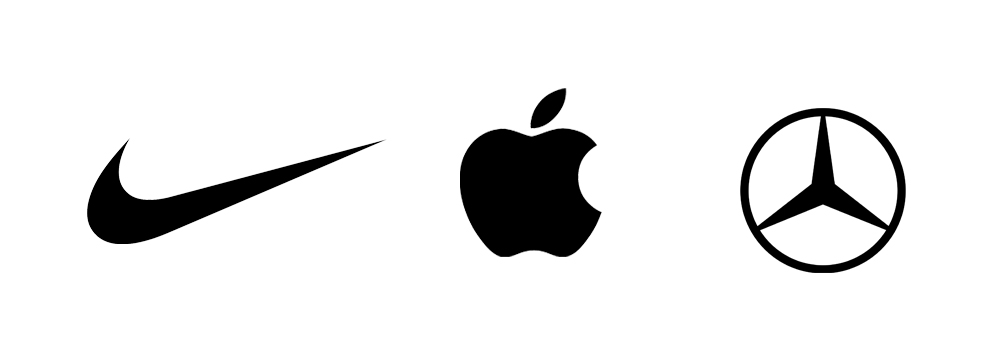
“A logo doesn’t need to say what a company does. A restaurant logo doesn’t need to show food, a dentist logo doesn’t need to show teeth, a furniture store logo doesn’t need to show furniture. The Mercedes logo isn’t a car. The Virgin Atlantic logo isn’t an airplane. The Apple logo isn’t a computer.” – David Airey
The Logo Design Process
STEP 1: RESEARCH – ANALYSIS, STRATEGY, BRIEF
Before the creative team even sketches the first line, proper research must be carried out. This verification happens during the analytical or strategic phase, in collaboration with the client, through briefing meetings or workshops.
A thorough initial stage helps designers understand the environment in which the logo will function. A logo for a construction company will be very different from a logo for a restaurant or a music band. It’s also crucial to analyze how competitors look, to avoid creating something that gets lost in a sea of similar colors and shapes. Together with the client, the team must also decide whether the approach to the new logo should be evolutionary or revolutionary.
STEP 2: UNDERSTANDING THE BRAND – DEBRIEFING
Once the creative team understands the industry, it’s time to dive into the brand itself – what exactly the client does and who their target audiences are.
This stage involves asking many questions and motivating the client to articulate what they want the new logo to communicate. Sometimes this phase takes the form of a debriefing session, where the agency refines the needs and expectations.
From our experience at Papajastudio, these discussions often provide valuable insights – both for the agency’s work and for the client’s own understanding of their market. Many companies don’t realize how different markets and players can be, and these conversations help identify what will make the brand stand out and earn trust through a new visual identity.
STEP 3: DESIGNING THE LOGO
Once all necessary insights are gathered and brainstormed, the creative process begins. This is the longest stage, where the brand’s future signature mark starts to take shape.
Designing a logo is not easy – it requires knowledge, versatility, and experience. At Papajastudio, we usually start with individual sketches made by each designer, either on paper or on a tablet. These first concepts are then discussed and filtered with the Creative Director to identify promising directions. We refine these ideas and revisit them during further brainstorming sessions.
A key principle: we always design in black and white first. Colors are only introduced in the later stages, since they can significantly influence how a design is perceived.
During this phase, dozens, sometimes hundreds – and in some cases even thousands – of variations may be created. Often, the process includes designing custom typography, which forms the lettering part of the logo. Some logos rely solely on typography (logotypes), while others combine type with a graphic symbol (logo mark or icon).
STEP 4: VERIFYING THE LOGO DESIGN
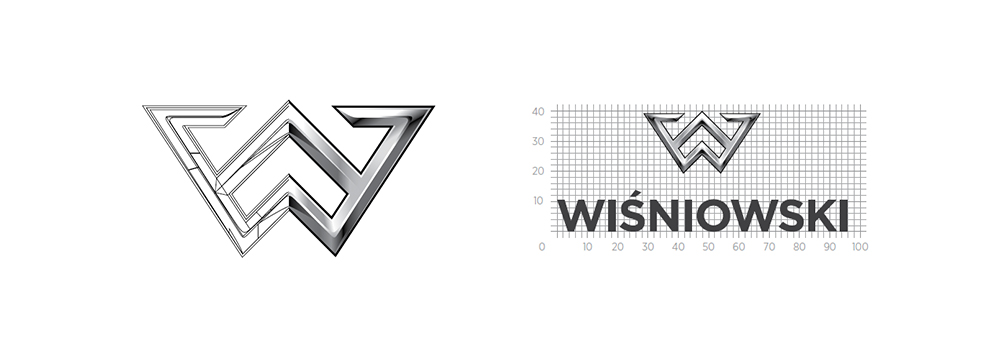
A strong logo must work in both color and monochrome (black and white). It must also look good in reverse – for example, in color or monochrome on a black background.
Verification also includes testing:
-
how the logo prints in grayscale,
-
how it performs in single-color use,
-
how it scales down to its minimum usable size,
-
how it appears in very large formats,
-
how it functions in 3D applications.
To ensure consistency and readability across different contexts, rules for proper use on various backgrounds are defined early in the brand guidelines (logo book).
A Logo Helps Build a Brand’s Visual Identity
A good logo is essential for any company because it serves as the foundation on which a stronger brand can be built. But a logo is not the brand.
Logo and brand are two distinct things, yet the logo plays a crucial role in shaping a brand’s visual identity. It becomes the graphic representation of the brand – the part of the company that audiences can most easily recognize and remember.
With the right name and a professionally designed logo, a brand can begin to build a consistent presence in the world.
“In a world where everything can be copied, the only stronghold is the brand. And its visual foundation, the starting point, is the logo.” – Marcin Bełza